




PLANTAR FASCIITIS TreatmenT
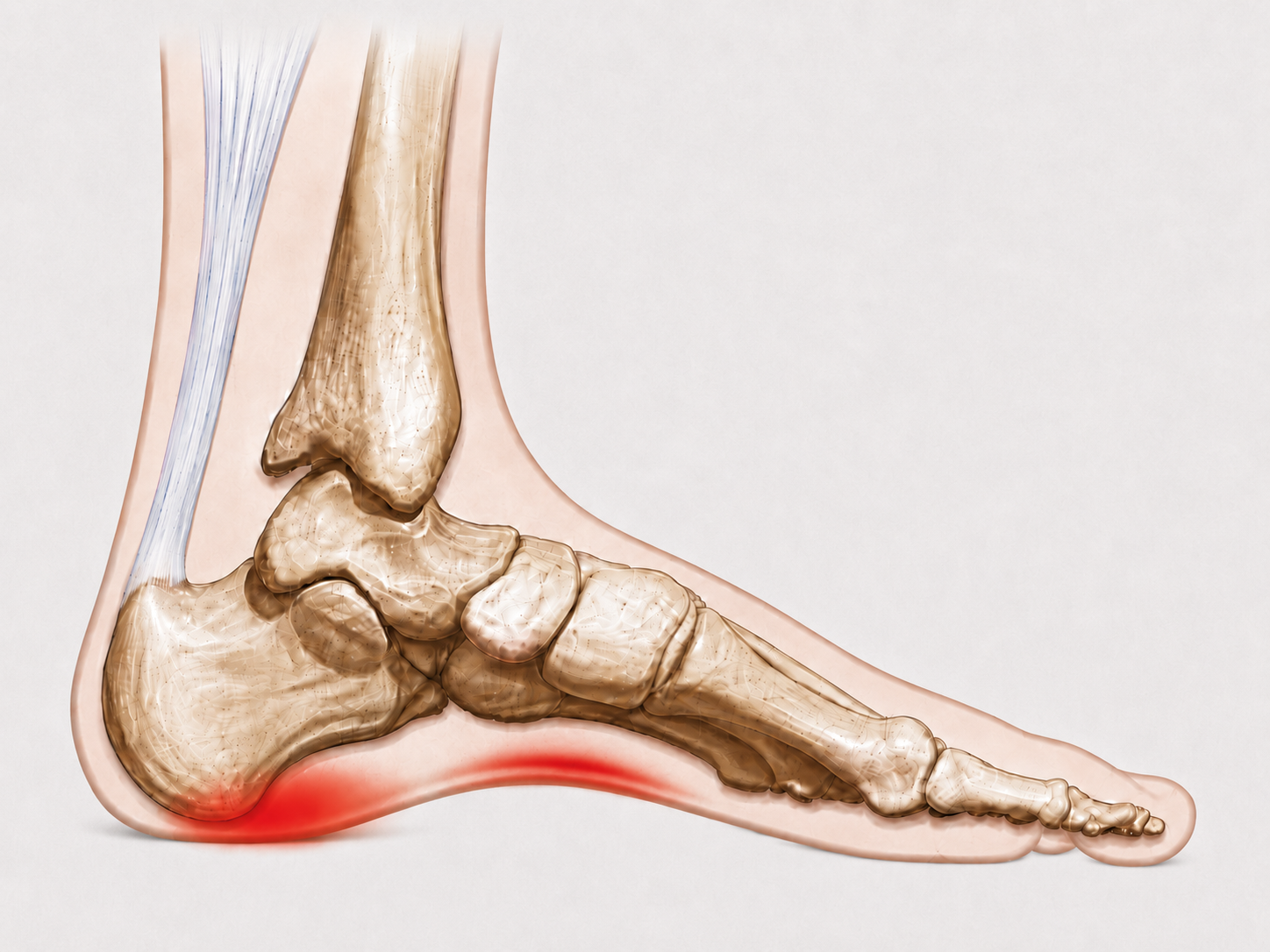
Plantar fasciitis is one of the most common causes of heel pain we assess in our Sydney clinics, with symptoms predominantly felt beneath the heel and sometimes extending forward into the arch of the foot.
Morning pain is particularly characteristic. For many patients, the first few steps after getting out of bed are the worst part of the day, with symptoms often beginning to ease within the first several minutes.
In more acute or advanced cases, the pain may not settle after those first few steps. It can become more persistent throughout the day, and some patients also experience throbbing discomfort while resting in bed at night.
Some cases of plantar fasciitis improve relatively quickly. Others persist for months or even years, despite repeated attempts to settle the pain.
By the time many patients attend Sydney Heel Pain Clinic, they have already worked through a long list of treatments, exercises, footwear changes and home remedies, often with temporary improvement followed by the same pain returning.
This can become particularly frustrating when every new treatment appears to offer another solution, but the heel remains painful and recovery never seems to progress.
Patients frequently arrive having already tried several, or sometimes nearly all, of the following:
When symptoms continue despite all of this, simply adding another generic treatment is unlikely to answer the more important question: what is the driving force behind the problem that has not yet been identified?
Plantar fasciitis can remain irritated when the forces reaching the fascia continue to exceed what the tissue can comfortably tolerate.
The contributing factors are not identical from one patient to another. Assessment therefore needs to look beyond the painful area itself and examine the mechanical, functional and lifestyle factors that may be maintaining the problem.
The style, structure and condition of footwear can materially influence heel pain. Modern shoes vary enormously in cushioning, flexibility, rigidity and sole geometry, and more cushioning does not automatically mean less stress. Assessment helps determine whether current footwear is assisting recovery or quietly perpetuating irritation.
Joint range of motion, ankle mechanics, calf muscle involvement and the wider posterior chain can all influence how forces are transmitted through the foot and heel. These relationships are assessed to determine the degree of calf and posterior-chain involvement in the individual presentation.
Pronation, supination, foot posture and individual movement patterns can alter how the plantar fascia is stressed. Subtle postural habits and loading behaviours may continue to irritate the tissue during everyday activity, often without the patient realising it.
Certain forms of training can clearly aggravate an irritable plantar fascia, while other physical activity may remain appropriate following consultation and assessment. The aim is to keep patients moving wherever possible, with treatment and load modification working alongside their exercise program during recovery.
In longer-standing cases, the plantar fascia may become less tolerant of normal loading. Chronic irritation, altered tissue quality or possible scar-related change may need to be considered, and in some cases further imaging or treatments such as shockwave therapy may become relevant.
Work demands can influence more than just time spent standing. Repeated positions, footwear requirements, movement patterns and the way a job loads the calf, ankle and foot may all contribute to persistent irritation and are considered as part of the broader mechanical picture.
The purpose of assessment is to identify which of these factors are relevant in the individual patient, rather than assuming that every case of plantar fasciitis requires the same treatment.
Many patients with persistent plantar fasciitis have already tried generic insoles or custom orthotics, sometimes without meaningful improvement.
The fact that an orthotic is custom-made does not necessarily mean that its geometry, contour or material characteristics are appropriate for the individual foot or the treatment objective.
Small differences in orthotic design can produce very different mechanical effects beneath the heel and through the plantar fascia.
An arch contour that is too high or prominent can create excessive pressure through a sensitive plantar fascia and increase irritation rather than reduce it.
An orthotic that is too low or too compliant may provide insufficient support or pressure redistribution to meaningfully influence the forces affecting the fascia.
Material selection matters. Excessively soft devices may deform under load, while inappropriate rigidity can create unwanted pressure or discomfort.
A device can be genuinely custom-made but still fail to address the particular loading pattern or mechanical factor contributing to the patient's heel pain.
Where orthotic therapy is clinically indicated, the objective is not simply to manufacture a custom insole. It is to determine what the device needs to achieve and then design the geometry around that objective.
Once plantar fascia involvement has been established, the assessment moves beyond the painful area itself and looks for the factors that may be continuing to provoke or delay recovery.
The objective is not to fit every patient into the same treatment pathway. It is to establish which findings are clinically relevant and then select treatment around the individual presentation.
The location, behaviour and irritability of the pain are assessed alongside palpation findings and the broader clinical presentation to confirm that the plantar fascia is the likely source of symptoms.
Foot posture, pronatory and supinatory forces, ankle mechanics and movement patterns are evaluated to identify mechanical influences that may be contributing to persistent plantar fascia stress.
Footwear, training, occupational demands and habitual loading are reviewed to identify less obvious factors that may be continuing to irritate the heel despite previous treatment.
The severity and duration of symptoms help determine current tissue tolerance, whether further imaging may be appropriate, and how aggressively treatment can be introduced.
Plantar fasciitis does not require the same treatment in every patient. Depending on the findings, management may involve footwear modification, load adjustment, shockwave therapy, orthotic therapy, rehabilitation, temporary offloading or a combination of these.
The important distinction is that treatment follows the assessment, rather than beginning with a predetermined protocol.
Once the relevant clinical and mechanical factors have been identified, treatment can be directed towards reducing irritation, improving tissue tolerance and addressing the factors contributing to persistent plantar fascia stress.
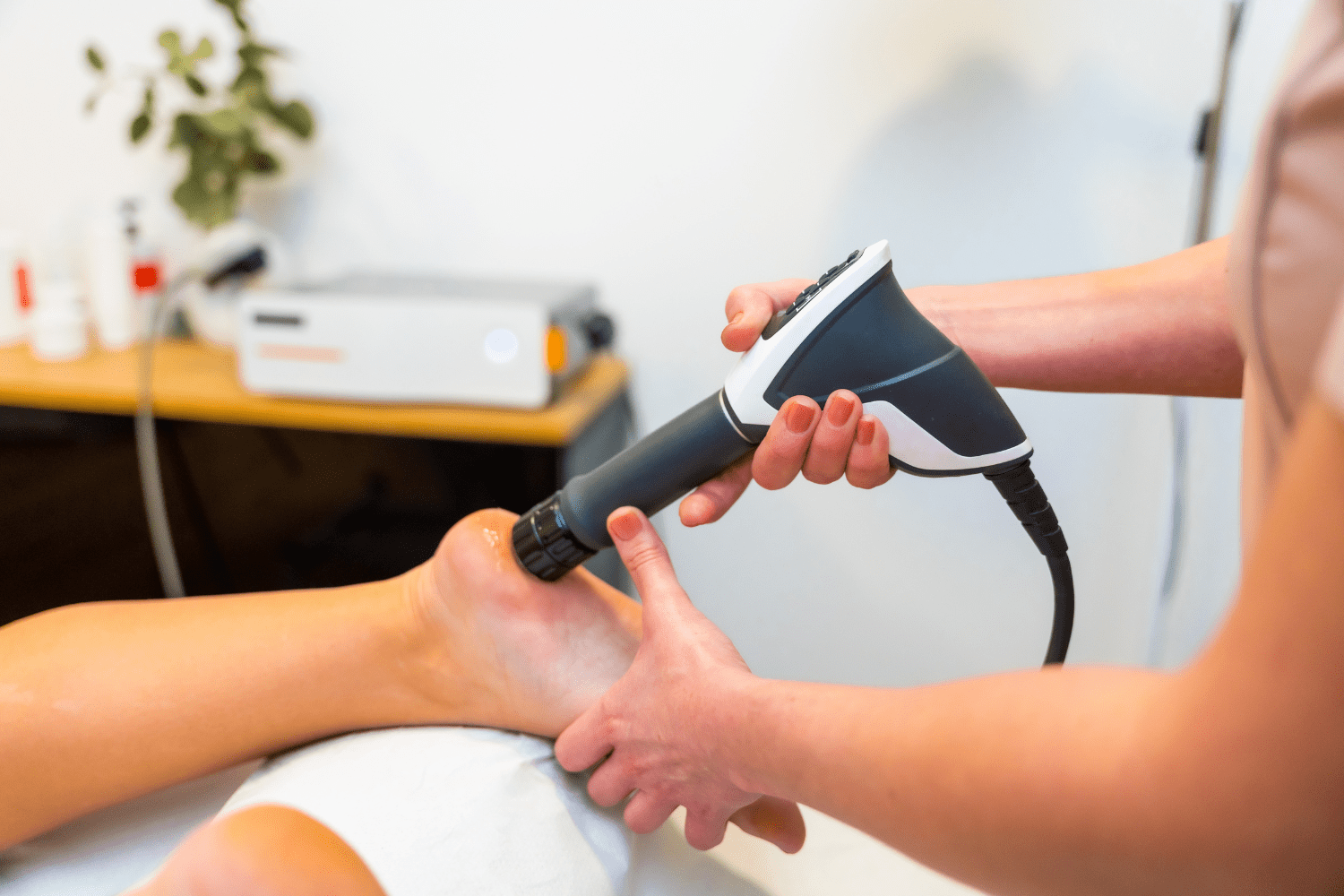
Shockwave therapy is used frequently at Sydney Heel Pain Clinic for persistent plantar fasciitis, particularly where symptoms have become chronic or have remained sensitive over a prolonged period.
Controlled acoustic energy is delivered into the symptomatic region to stimulate a local biological response within the tissue and support the recovery process.
Shockwave therapy is not used as a stand-alone treatment. If the mechanical, footwear or loading factors maintaining irritation are not also addressed, shockwave alone may not produce the desired result.
Where pressure redistribution or mechanical modification is indicated, orthotic geometry can be designed around the individual foot, loading pattern and treatment objective.
Shoe choice may be refined according to cushioning, flexibility, rigidity, sole geometry, fit and the way the shoe interacts with the individual foot.
Training, walking and occupational demands may be modified where necessary, with the aim of reducing repeated irritation while keeping the patient active wherever possible.
Where calf, ankle or posterior-chain involvement is identified, treatment is directed according to the specific clinical findings rather than using a generic exercise protocol.
More acute or highly irritable presentations may occasionally require a period of temporary unloading before normal activity is progressively restored.
Where symptoms, examination findings or delayed recovery raise questions about tissue integrity or an alternative diagnosis, further imaging or referral may be appropriate.
The treatment plan is therefore determined by the presentation in front of us, not by a standard plantar fasciitis protocol.

Persistent plantar fasciitis can be complex. Our clinical systems, assessment process and treatment options have been developed around patients presenting with heel pain and lower-limb mechanical problems.
The clinic is led by sports podiatrist Karl Lockett, whose clinical experience includes five years providing podiatry services within the Sydney Opera House, alongside extensive work with persistent heel-pain presentations.
Clinical experience across a broad range of heel-pain presentations.
Assessment and treatment are centred on heel and lower-limb pathology rather than general podiatry.
Clinical experience in biomechanical assessment, plantar fasciitis and persistent heel-pain presentations.
3D scanning, CAD modelling and in-house 3D printing provide greater control over individual orthotic design parameters when orthotic therapy is indicated.
The objective is not simply to treat a painful heel, but to understand the presentation in enough detail to make each treatment decision clinically relevant.
Some of the most common questions patients ask about persistent plantar fasciitis, treatment and recovery.
Yes. With the correct treatment approach, plantar fasciitis can resolve. The key is identifying the factors continuing to irritate the fascia and addressing them appropriately rather than relying on repeated generic treatment.
During sleep the foot is unloaded and the plantar fascia rests in a shortened position. When you first stand, the tissue is suddenly placed under tension again, which is why the first few steps can be particularly painful. As the foot warms up and begins moving, symptoms often start to ease.
Yes. Pain is most commonly concentrated beneath the heel, but symptoms can sometimes extend forward along the plantar fascia into the arch of the foot.
Shockwave therapy can be very effective in persistent plantar fasciitis, particularly when symptoms have become chronic or have remained sensitive over a prolonged period. It is not a stand-alone treatment, however. If the mechanical or loading factors maintaining irritation are not also addressed, shockwave alone may not produce the desired result.
Not every patient requires custom orthotics. Plantar fasciitis often responds well to improved pressure redistribution, which can sometimes be achieved through appropriate footwear and, where required, to a greater extent through a correctly designed custom insole inside the shoe.
Orthotic effectiveness depends on more than whether a device is custom-made. Arch geometry, contour, material characteristics and the intended mechanical objective can all influence how the device interacts with the plantar fascia.
Certain activities may aggravate an irritable plantar fascia, while others may remain appropriate following consultation and assessment. Wherever possible, the aim is to keep patients moving during recovery.
There is no single shoe that suits every patient. Cushioning, flexibility, rigidity, sole geometry, fit and the interaction between the shoe and your individual foot all need to be considered. More cushioning does not automatically mean a better shoe for plantar fasciitis.
If plantar fasciitis has continued despite stretching, footwear changes, insoles or previous treatment, the next step may be a more detailed assessment of the factors continuing to drive the problem.
Sydney Heel Pain Clinic Parramatta operates from Panacea Health Clinic in North Parramatta, providing musculoskeletal podiatry for foot, ankle and lower-limb conditions.
Panacea Health Clinic
13A Buller Street
North Parramatta NSW 2151
George Milner consults regularly at Parramatta, with Karl Lockett available on selected clinic days.
No GP referral is required. Appointments can be booked online or by calling the clinic.

