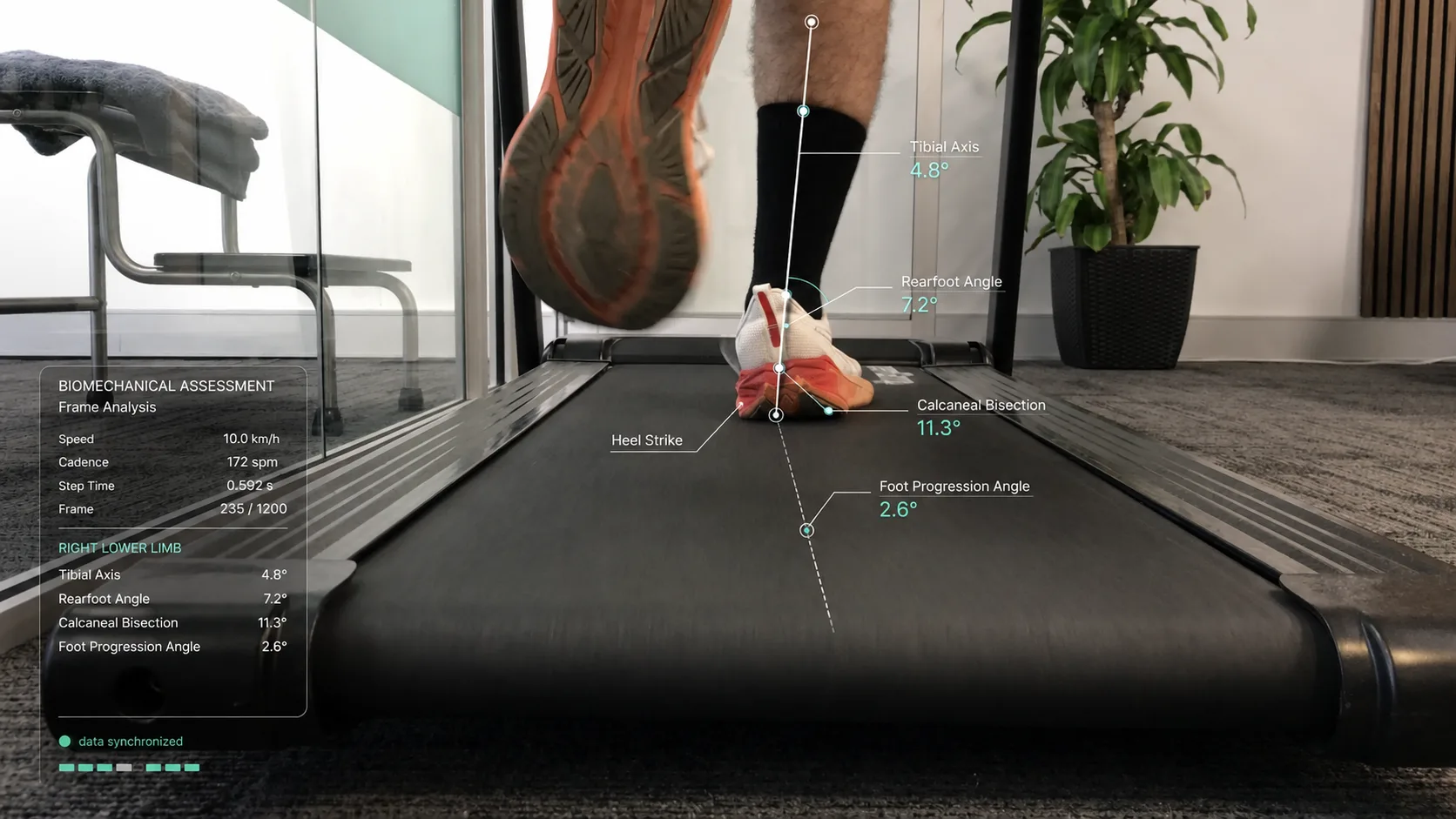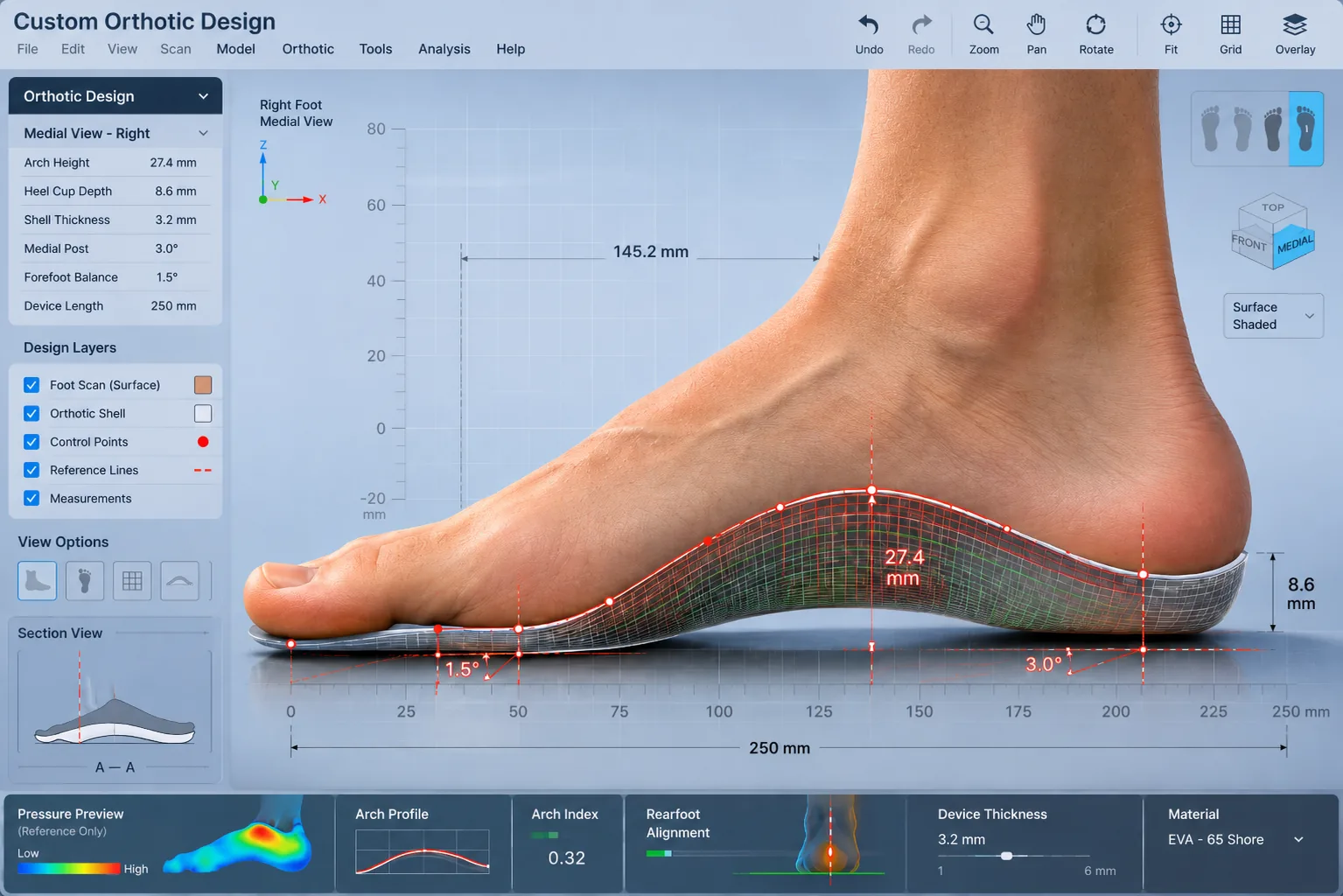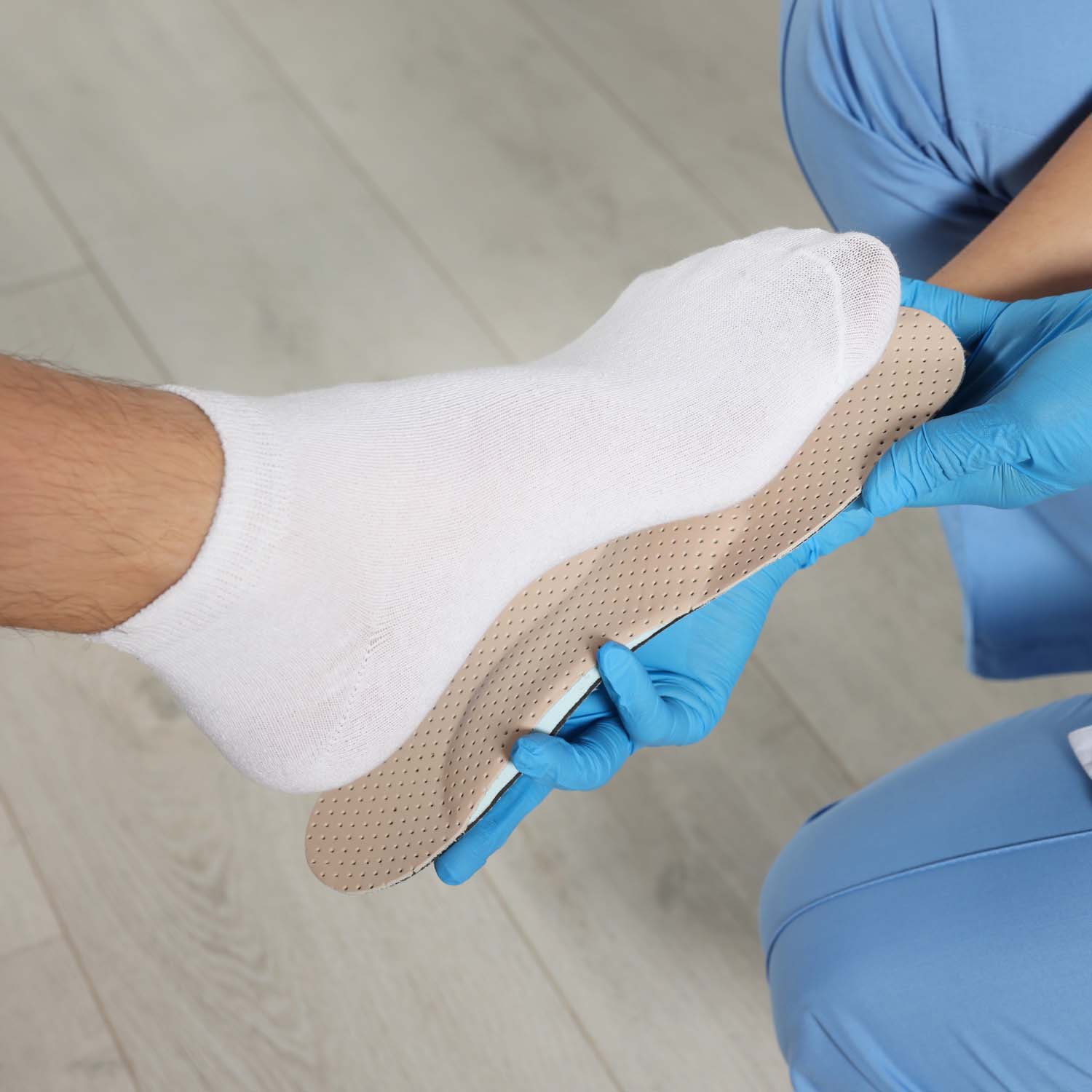




Functional clinical assessment and 3D foot scanning are combined with customised CAD modelling software, where orthotic geometry and individual design parameters are evaluated and refined, then produced using in-house 3D printing.
Comfort Guarantee
In the unlikely event, unlimited adjustments, remakes or refund.
Almost Any Shoe. No Design Challenge.
3D CAD allows us to design for virtually any footwear.
Expedited In-House Production
Typically ready within 2–3 business days, with same-day printing available with approval.
Book a functional assessment to determine whether custom orthotics are clinically indicated for your foot, footwear and presenting condition.
Digital scanning gives us a detailed three-dimensional representation of the foot. It records its shape, contours and dimensions. But a scan does not decide how an orthotic should be designed, how it should function, or which mechanical features should be incorporated.
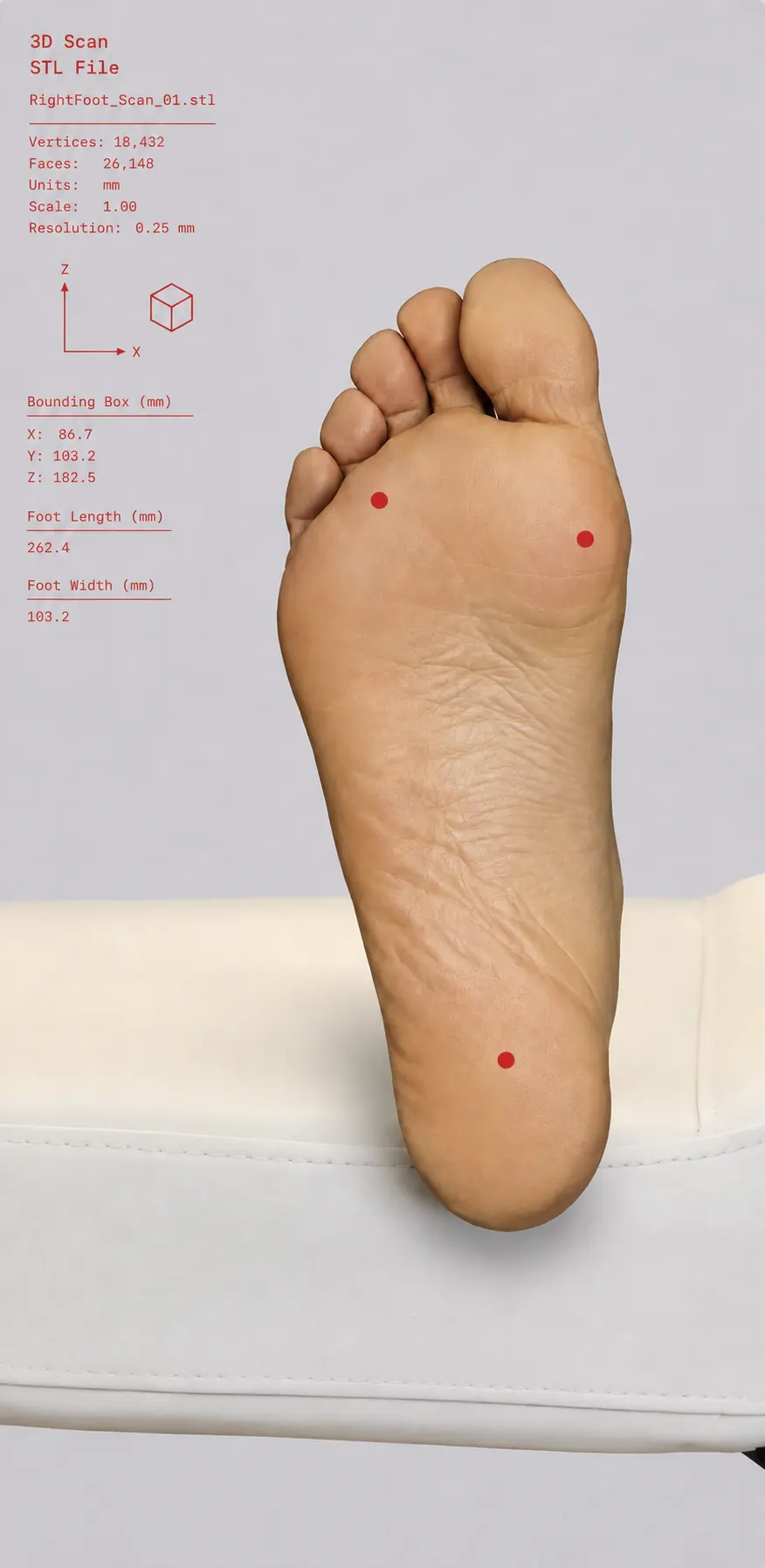
A 3D scan creates the digital foundation from which an orthotic can be designed. It allows the contours of the heel, arch and forefoot to be examined in three dimensions rather than relying on a generic foot shape.
But capturing the foot accurately is not the same as designing the orthotic correctly.
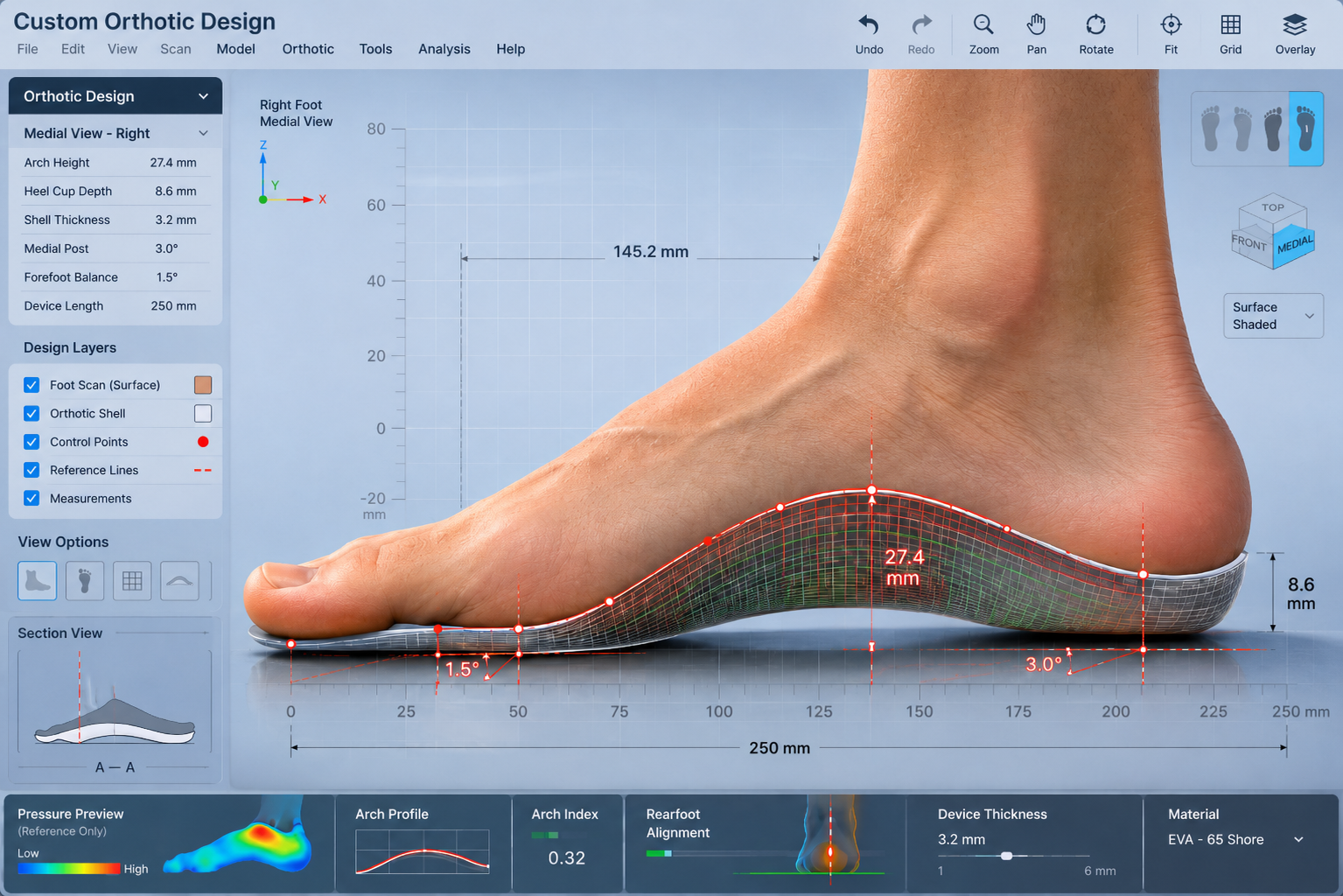
CAD software allows the orthotic geometry to be modelled in considerable detail. Arch contour, heel geometry, device thickness, correction, shell characteristics and footwear-specific dimensions can all be individually evaluated and modified.
The technology is important. How it is used is more important. Software provides the design tools, but it does not replace clinical judgement or experience. The final device still depends on how the scan is interpreted, which parameters are altered, how much correction is introduced and how those decisions relate to the patient's pathology, biomechanics, activity and footwear.
Thanks to detailed CAD design, retained digital files and in-house 3D printing, individual orthotic parameters can be modified without restarting the entire process.
In the unlikely event that we are unable to produce a custom orthotic that you are comfortable using, or that fits appropriately within the footwear it was designed for, your investment is protected by our no-risk refund policy. Conditions apply.
Please note: Custom orthotics are dispensed at the clinician’s discretion and only where clinically indicated. Where an orthotic is considered unnecessary or unsuitable, an alternative treatment approach may be recommended.
Clear answers to the questions patients most often ask before deciding whether custom orthotics are appropriate.
Orthotics occasionally require a short period of adaptation, but persistent discomfort should not simply be accepted. The advantage of designing and manufacturing them in-house is that individual areas can be reviewed and modified. Adjustments and, where necessary, remakes can be undertaken rather than expecting the patient to tolerate an unsuitable device.
In most cases, yes. The 3D design process allows the orthotic geometry and thickness to be altered for different footwear. Orthotics can be made for sports shoes, work shoes, street shoes and other footwear where space is more restricted.
Generic insoles are usually designed primarily to provide cushioning rather than meaningful mechanical control. To accommodate a wide range of foot shapes, they are generally made from softer materials that deform easily.
Those materials can compress relatively quickly, which means the insole may lose much of its original shape and support within the first few weeks of use.
Because softer materials provide less structure, generic insoles are also often made thicker to create cushioning. This can make them more difficult to fit inside certain shoes.
Their shape is also standardised. The left and right devices are essentially mirror images of one another and are designed for the average foot rather than an individual patient.
A detailed assessment frequently identifies small but clinically relevant differences between the left and right foot. One side may require a different contour, correction, cushioning profile or design parameter from the other. Those differences can be incorporated into a prescription orthotic, but they cannot be accommodated by a symmetrical pair of mass-produced insoles.
Custom orthotics should not be prescribed simply because a foot looks flat or a scan looks unusual. We first assess your symptoms, foot function, gait, footwear and mechanical loading patterns. Orthotics are recommended only when there is a clear clinical reason to alter the way load is being transferred through the foot or lower limb.
No. A 3D scan records the shape of the foot, but it does not explain how the foot functions during walking or running, what is causing pain, or what an orthotic needs to change. The scan is one part of the process. The clinical assessment and subsequent CAD design determine the actual prescription.
The orthotics are designed, reviewed and refined in-house rather than being sent away with limited control over the final prescription. CAD modelling allows individual design parameters, including contour, correction, cushioning, thickness and footwear fit, to be evaluated before printing.
Because the CAD design and 3D printing are performed in-house, turnaround is generally much faster than traditional laboratory manufacture. In most cases, orthotics can be produced within approximately two to three business days, with expedited manufacture sometimes possible when clinically appropriate.
They can be very effective when abnormal loading or mechanical function is contributing to the condition. However, orthotics are not automatically required for every patient with heel pain. The purpose of the assessment is to establish whether changing load through the foot is likely to assist the injured tissue and form part of an appropriate treatment plan.
No. A GP referral is not required.
If you have an ongoing chronic foot condition, you may be eligible for a GP care plan, which can provide Medicare contributions towards up to five eligible allied health appointments per calendar year.
Medicare does not contribute towards the cost of custom orthotics. Orthotics may instead be claimable through your private health insurance, depending on your level of cover.
Yes, provided your extras policy includes podiatry. Check with your private health insurer to confirm your level of cover and rebate.
Because item code 221 applies to one orthotic, a pair is usually billed as 221 × 2.
The amount refunded varies between insurers and policies, so it is worth checking your expected rebate before proceeding.