Clinical Information
Detailed Information About Upper Heel Pain
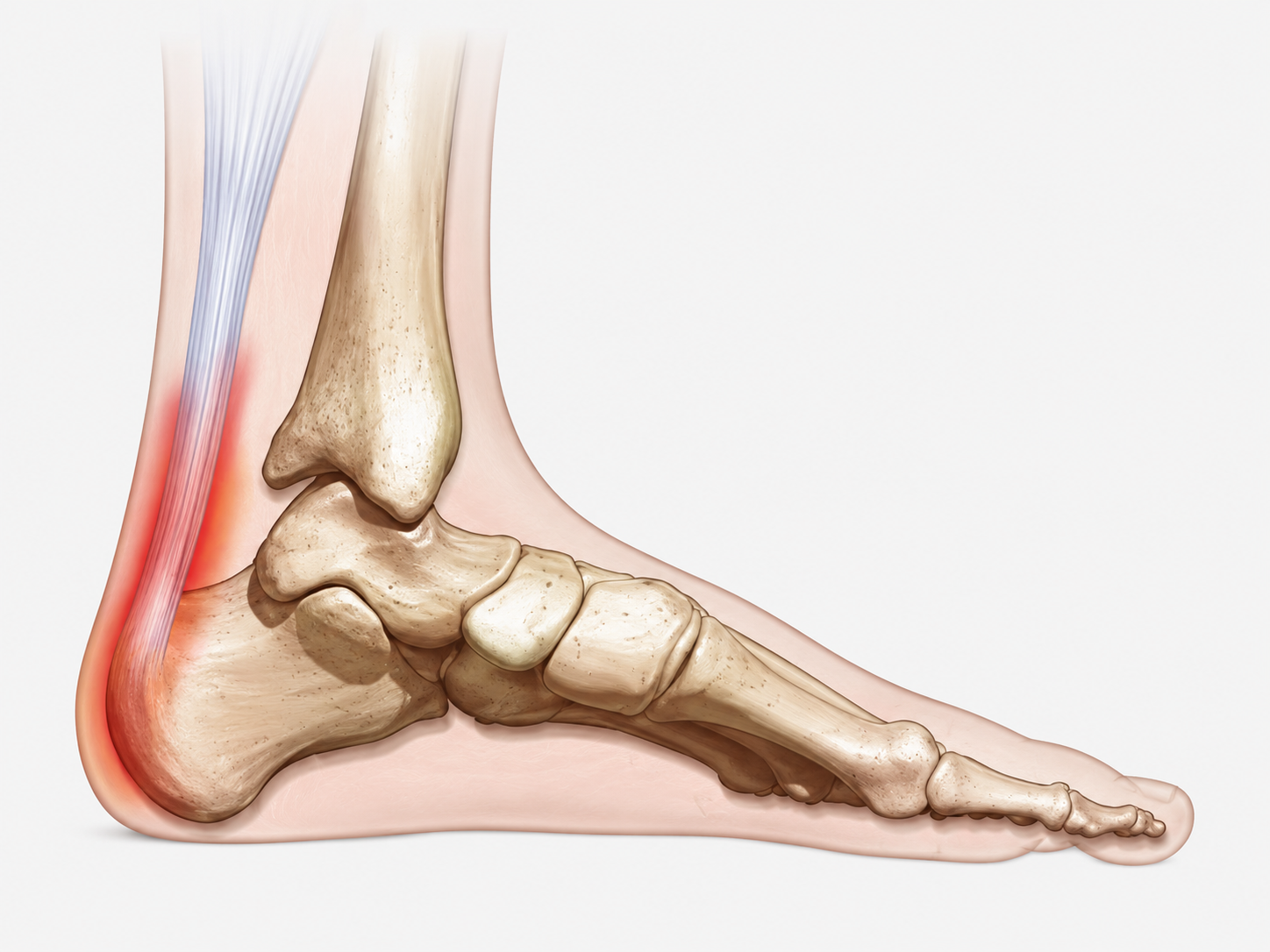
Mid-Portion Achilles Tendinopathy
The Achilles tendon transfers force generated by the calf muscles to the
heel during walking, running and push-off. Mid-portion Achilles tendinopathy
affects the tendon above its insertion into the calcaneus.
Symptoms may include local tenderness, stiffness, tendon thickening and
pain during or following loading. Morning stiffness and discomfort after
periods of inactivity are commonly reported.
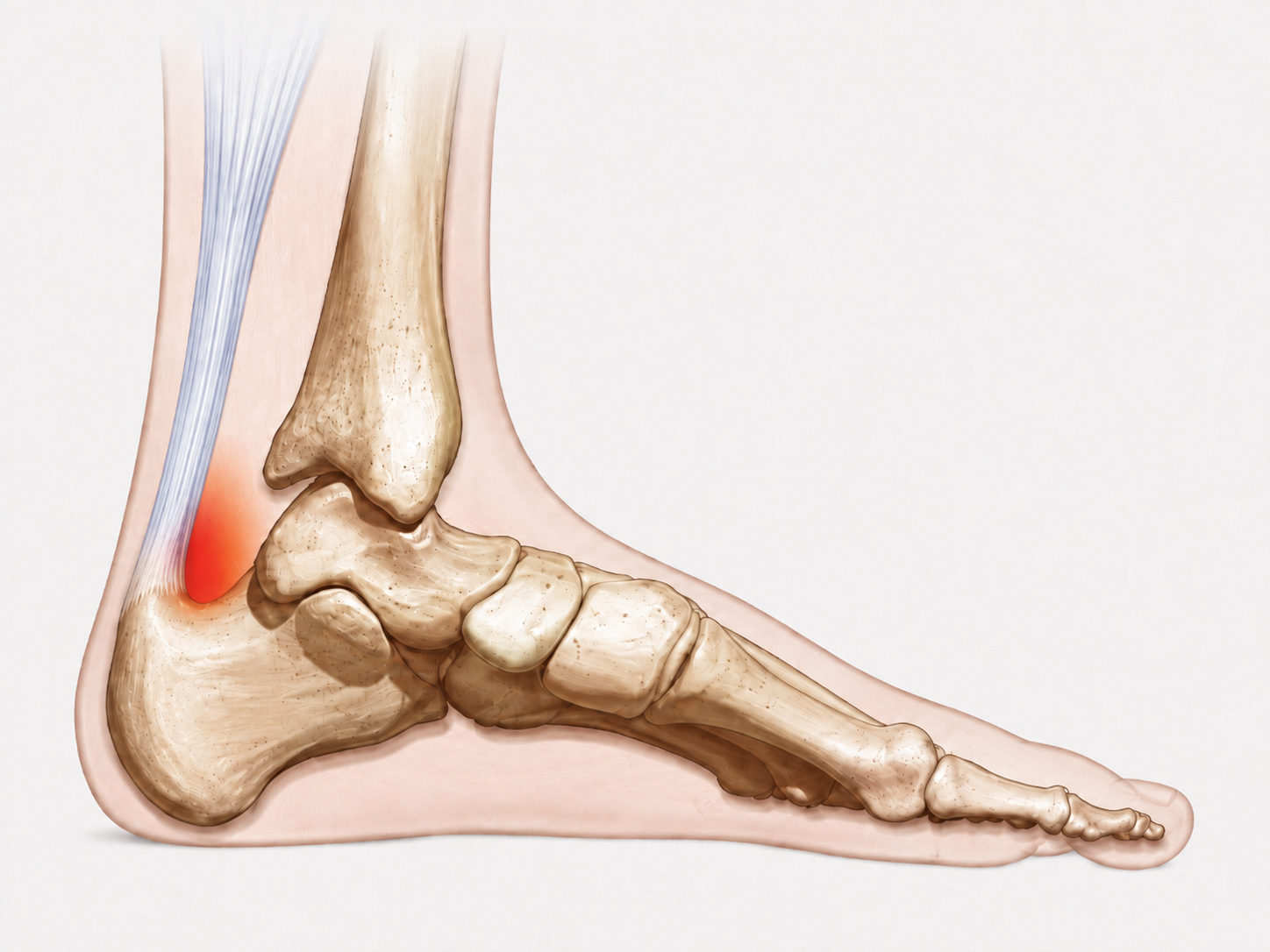
Retrocalcaneal Bursitis
The retrocalcaneal bursa lies between the anterior surface of the Achilles
tendon and the upper posterior calcaneus. Its function is to reduce friction
as these structures move in relation to one another.
Irritation of the bursa may produce upper heel pain, stiffness and tenderness.
Because of its anatomical proximity to the Achilles tendon, bursal and tendon
symptoms may coexist.
Why the Exact Pain Location Matters
Pain higher within the Achilles region is more suggestive of mid-portion
tendon pathology than classic insertional Achilles tendinopathy.
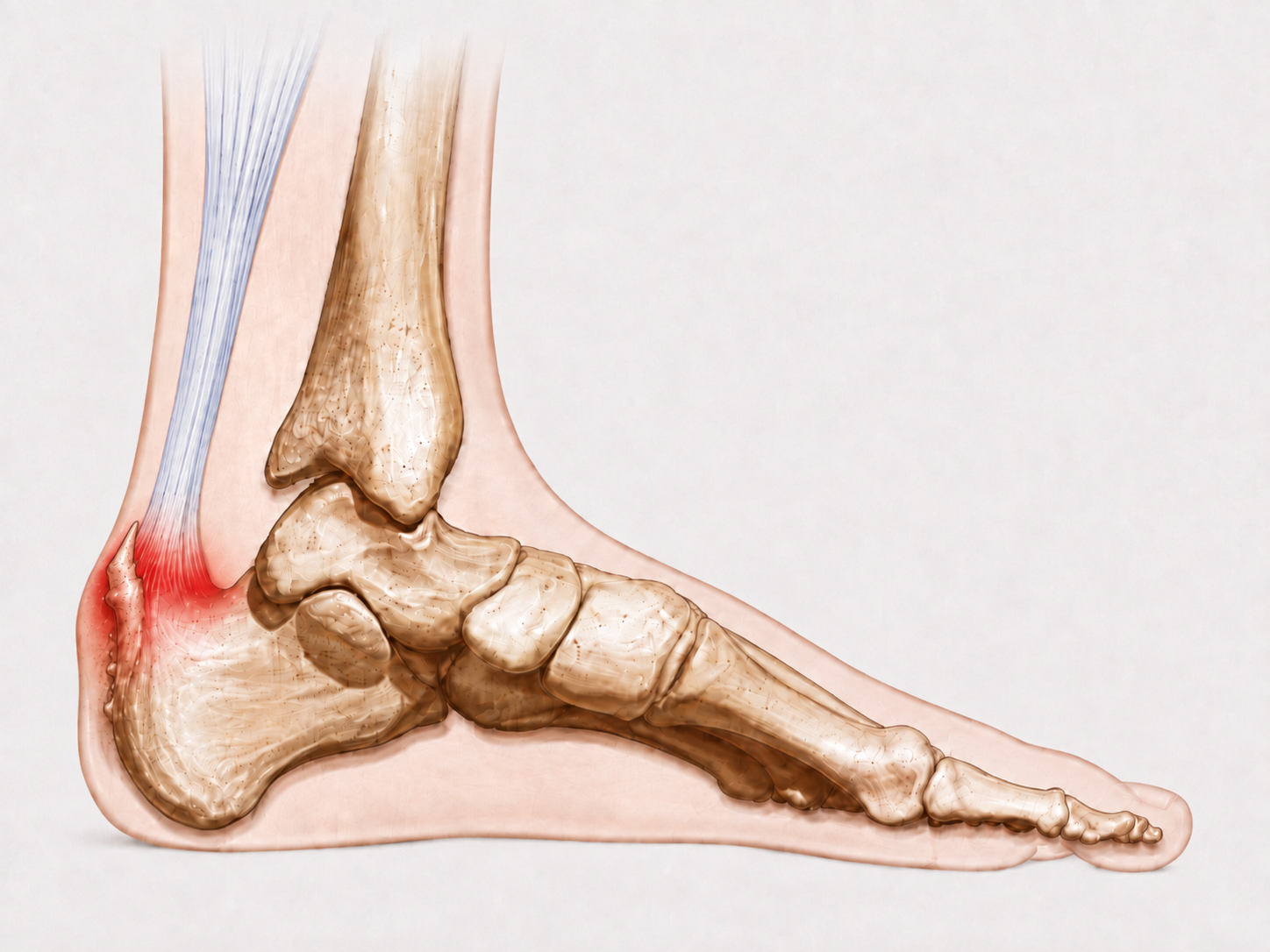
Conversely, symptoms positioned directly around the Achilles attachment
and posterior heel bone make insertional tendon pathology, posterior
calcaneal prominence, posterior calcaneal spur formation and adventitial
bursitis more clinically relevant.
Mechanical Factors That May Be Driving the Problem
We assess the factors that may be increasing load through the Achilles region
or contributing to ongoing compression and irritation.
- Running and training load
- Hills, acceleration and repeated push-off
- Calf capacity and endurance
- Ankle movement and calf stiffness
- Gait and foot mechanics
- Footwear construction and heel height
- Local compression around the Achilles region
- Timing and progression of treatment
Imaging
Imaging is not required in every case of upper heel pain. When the clinical
presentation warrants further investigation, ultrasound, X-ray or MRI may
assist in evaluating tendon structure, the retrocalcaneal bursa, adjacent
bone and other potential sources of symptoms.
Author
Written by Karl Lockett, Sports Podiatrist