

Custom Orthotics vs Over-the-Counter Orthotics: Understanding the Difference
Table of Contents
Heel pain is one of the most common foot conditions, often impacting daily activities like walking, work, and sports. According to research, approximately 9.6% of Australians experience plantar heel pain, with 7.9% reporting disabling symptoms. Plantar heel pain is the most frequent pattern, leading many people to seek help from a podiatrist.
Despite trying rest, stretching, or changing shoes, many still wake up with “first step” pain or experience discomfort after sitting or standing for long periods. Orthotics for heel pain can provide relief by adjusting how the foot handles load, particularly for stubborn or long-standing symptoms. When other methods fall short, they help support the arch and distribute pressure more evenly.
Even if you’ve tried orthotics before with no results, our podiatrists at Sydney Heel Pain can help. We have 25 years of experience designing orthotics to match patients’ feet to the millimetre, thanks to our advanced 3D scanning and printing technology.
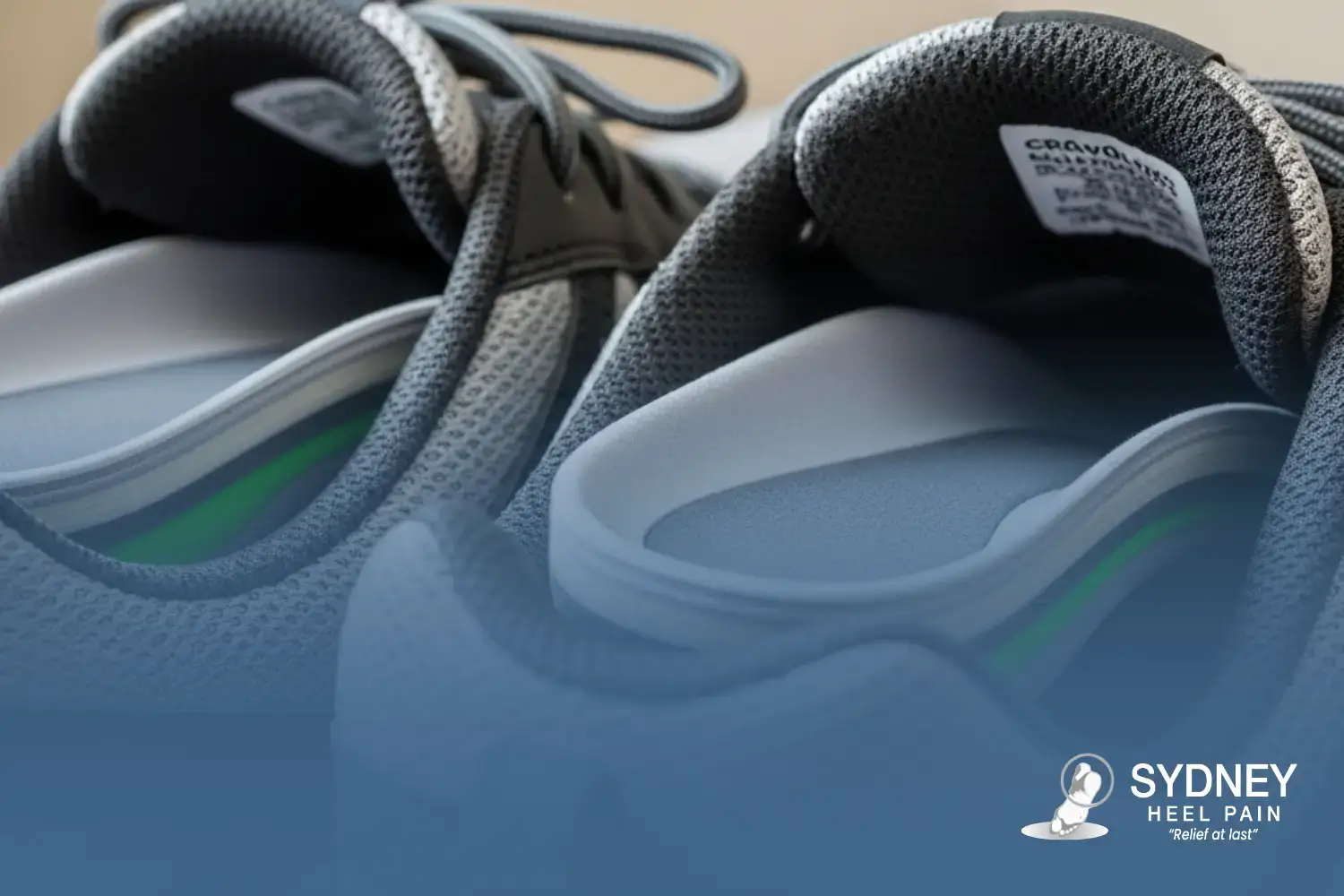
Foot orthoses can relieve heel pain by changing how force travels through the heel and arch. This reduces mechanical overload on foot structures, helping the body recover. Custom orthotics play a key role in unloading irritated tissues through firm arch support, thereby improving foot function when part of a broader treatment plan and matched with the right footwear.
Inserts are particularly useful when heel pain is persistent or recurring, despite trying basic treatments like rest or stretching. In these cases, custom orthotics are prescribed after an assessment confirms the need for ongoing mechanical control. They help provide adequate arch support, offering targeted relief - especially in cases where the pain has become long-standing.
How Do Orthotics Relieve Heel Pain?
Insoles relieve heel pain by unloading the plantar fascia, supporting the foot's arch, and improving foot biomechanics. These changes help reduce mechanical strain on the foot, allowing the tissue to settle and recover. Here's how they can work:
- Unload the plantar fascia to lower strain on the heel and surrounding tissues.
- Support the arch of the foot to ensure proper foot alignment.
- Improve foot biomechanics to optimise movement and support, unloading irritated tissues in the heel and plantar fascia.
- Supporting tissue recovery by reducing strain on the plantar fascia.
- Provide relief when heel pain persists despite other treatments.
Types of Heel Pain That Orthotics Can Address
Orthotics help with a range of heel pain conditions by redistributing pressure, supporting the foot, and improving alignment. They are designed to address the mechanical causes of heel pain, providing relief for various conditions.
- Plantar fasciitis causes pain at the bottom of the heel due to inflammation of the plantar fascia, often felt most sharply with the first steps of the day.
- Achilles tendinopathy leads to inflammation at the back of the heel, typically causing stiffness and pain that worsens with activity.
- Heel spurs are bony growths that develop on the underside of the heel bone, often associated with long-standing plantar fasciitis.
- Tarsal tunnel syndrome involves compression of the tibial nerve, causing pain, tingling, or burning sensations around the heel and arch.
- Haglund’s deformity (pump bump) is a bony enlargement at the back of the heel that can cause pain and irritation where the heel meets footwear.
- Bursitis involves inflammation of the fluid-filled sac near the heel, causing localised pain and tenderness with movement or pressure.
Benefits of Using Orthotics for Heel Pain
Insoles for heel pain offer a range of benefits, providing targeted support and reducing foot strain. These orthotic insoles help alleviate discomfort and promote long-term healing.
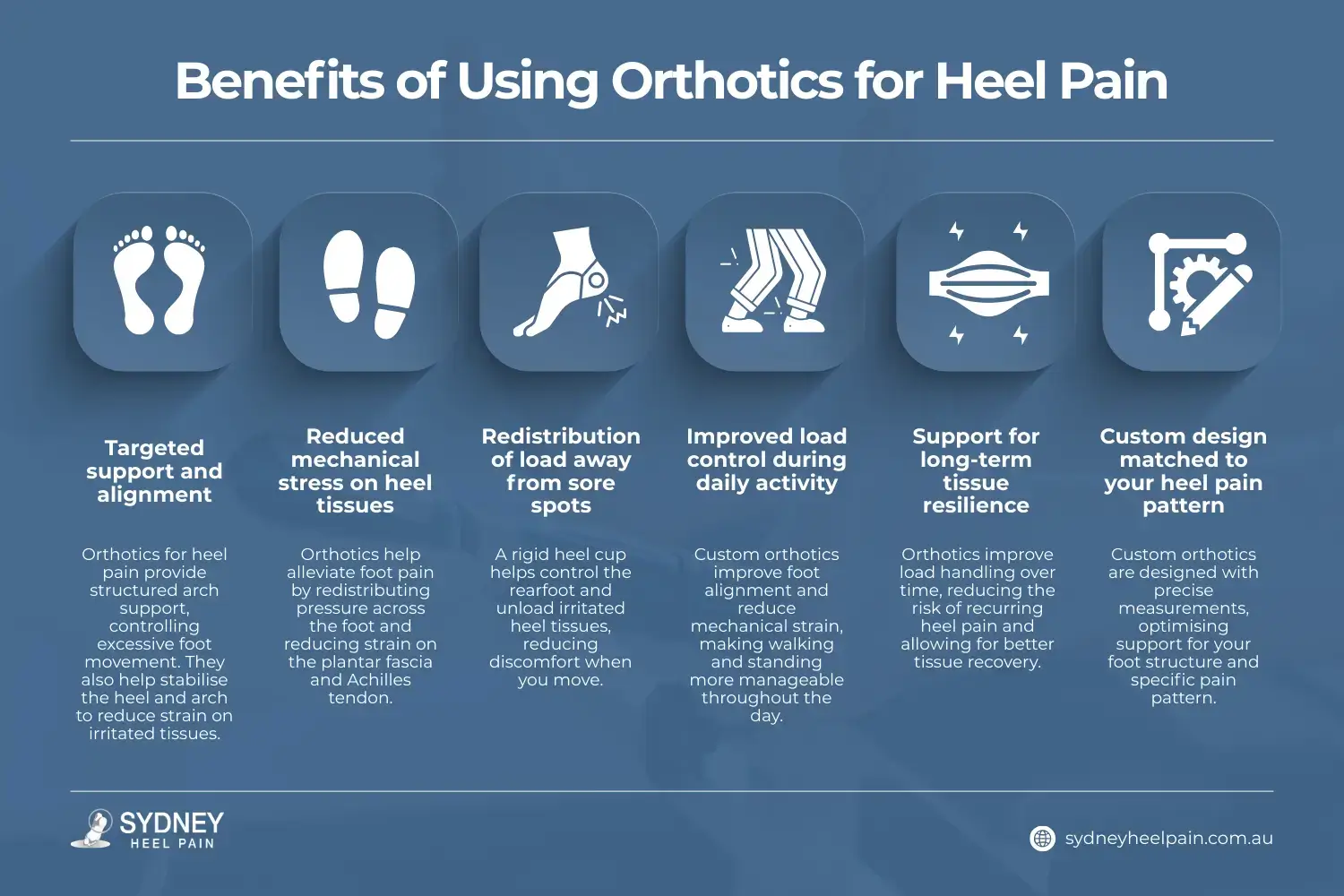
- Targeted support and alignment: Orthotics for heel pain provide structured arch support to control excessive foot movement. They also help stabilise the heel and arch, reducing strain on irritated tissues.
- Reduced mechanical stress on heel tissues: Orthotics help alleviate foot pain by redistributing pressure across the foot and reducing strain on the plantar fascia and Achilles tendon.
- Redistribution of load away from sore spots: A rigid heel cup helps control rearfoot motion and unload irritated heel tissues, reducing discomfort as you move.
- Improved relief with day-to-day impact: Custom orthotics improve foot alignment and support unloading irritated tissues, making walking and standing more manageable throughout the day.
- Support for long-term tissue resilience: Orthotics improve load handling over time, reducing the risk of recurrent heel pain and enabling better tissue recovery.
- Custom design matched to your heel pain pattern: Custom orthotics are designed with precise measurements, thanks to advanced 3D scanning and 3D printing, providing exact support for your foot structure and specific pain pattern.
Orthotics As Part of Your Treatment Plan
Orthotics work best when they’re part of a broader treatment plan, not a stand-alone fix. During your assessment, we identify where the foot's load has become excessive and create custom orthotics to help unload the stressed structures.
Our approach follows a “lengthen, don’t strengthen” philosophy, which focuses on easing tension in soft tissues rather than adding strengthening exercises that may increase strain.
Footwear also plays an important role. Modern shoe design often prioritises style over support, so clear guidance on choosing shoes with firm support in the right areas is essential to help orthotics work effectively and deliver lasting results.
When to See a Podiatrist About Heel Pain
Heel pain is common, but when it persists or returns, seeing a podiatrist is important. A professional can diagnose the cause and provide targeted treatment to help you recover.
- Heel pain and plantar fasciitis that doesn’t improve after several weeks may need a more thorough examination.
- Pain in the morning, especially sharp “first step” pain under the heel, is often a sign of plantar fasciitis and should be evaluated.
- Heel pain that returns after standing, walking, or running, even after rest or shoe changes, needs to be looked at to prevent further damage.
- If heel pain is affecting your ability to work, play sports, or perform daily tasks, seeking a podiatrist's help will ensure you get the right treatment.
- Heel pain accompanied by swelling, a visible bump, or difficulty with stairs may indicate a more serious issue.
- Pain in the morning or recurring heel pain in children, particularly after physical activity, should be assessed by a podiatrist to avoid long-term problems.
- Numbness, tingling, or burning sensations around the heel could indicate nerve involvement and warrant further evaluation.
- If your heel pain has not improved with basic treatments like rest, stretching, or over-the-counter insoles, a podiatrist might suggest custom orthotics for long-term relief.
How Sydney Heel Pain Creates Custom Orthotics
This process allows us to design and manufacture orthotics that match the patient’s feet exactly, providing the best support.
1. Foot Capture
First, we record the exact shape of your foot using specialised 3D scanning software. This step may also involve casting or digital moulding to obtain an exact model down to the millimetre. This level of precision is what allows us to provide orthotics that actually work.
2. Orthotic Design
This stage is where clinical expertise makes a difference. Our 25+ years of experience help us to determine the exact specifications of your orthotic, including materials, density, stiffness, shell thickness, arch height, and contouring.
We also control medial and lateral widths, posting angles and detailed modifications such as deflections, grooves, cut-outs, skives, and pressure adjustments. These decisions determine how the orthotic controls foot mechanics and relieves stress on tissues.
If the design phase is poorly executed, a custom orthotic won’t do the job it’s meant to do. At Sydney Heel Pain Clinic, this is where our experience really matters.
3. Manufacturing
Many podiatrists outsource this stage, but we complete manufacturing in-house to retain full control of your device. Using advanced 3D printing, we create orthotics tailored to your exact foot mechanics for optimal support.
If heel pain is holding you back, it’s time to take action. At Sydney Heel Pain Clinic, our podiatry team is here to help you find the right solution for lasting relief. From custom orthotics to personalised advice, we focus on addressing the root causes of your discomfort. For many patients, custom orthotics may lower pain and improve mobility.
Book an appointment to take the first step forward to managing your heel pain.
Orthotics for Heel Pain FAQs
How long do custom orthotics last?
Custom orthotics generally last 1 to 2 years, depending on the materials used and how often they are worn. They should be reviewed if your symptoms change, the orthotics appear worn, or they begin to feel less supportive. Regular check-ups can help ensure they continue to provide the necessary relief.
Are orthotics suitable for children?
Yes, orthotics can be suitable for children when there is a clear clinical need, such as persistent heel pain, Severs disease, or ongoing foot pain that affects daily activities or sports.
However, they should always be assessed and prescribed by a podiatrist. The podiatrist will ensure the orthotic design is customised to the child. Regular reviews are essential as the child develops to ensure continued support and effectiveness.
Can orthotics transfer between shoes?
Yes, orthotics can typically be moved between similar, closed-in shoes with enough depth and a removable insole. If you’re switching to shoes that are flat, tight, or a different style (like dress shoes or sandals), it’s better to change the shoes, as they may not provide the proper fit for the orthotic.
Back to Top: Orthotics for Heel Pain: Insoles for Plantar Fasciitis, Arch Support, and More