


Custom Orthotics vs Over-the-Counter Orthotics: Understanding the Difference
Table of Contents
Heel and arch pain often persists despite supportive shoes, rest, and generic over-the-counter insoles. This is because many off-the-shelf orthotics are built for an average foot rather than your individual shape or movement pattern.
One Australian study reported that podiatrists prescribe around 4.4 pairs of custom orthoses each week. That figure alone suggests that many patients require more precise mechanical support than standard over-the-counter inserts can provide. When discomfort lingers, patients often begin examining custom orthotics versus over-the-counter options more closely.
At Sydney Heel Pain, a custom orthotic is made to your specific foot shape and loading pattern.
Our custom orthoses are firm “touch and hold” devices. Each device aims to unload irritated tissue instead of cushioning the foot. By directing support to the area under excessive strain, the device reduces mechanical stress during walking and allows overloaded tissue to begin to settle.
Foot orthotics are removable inserts placed inside shoes to alter how forces are transmitted through your feet during standing and walking. They’re used to help improve foot function by guiding the foot into a more controlled position.
Orthotics typically provide more structured support than simple arch supports and help manage load across the foot. They may be prefabricated or custom-made, with custom orthotics designed to match an individual’s foot shape for more targeted correction of excessive motion.
What Are the Different Types of Orthotics?
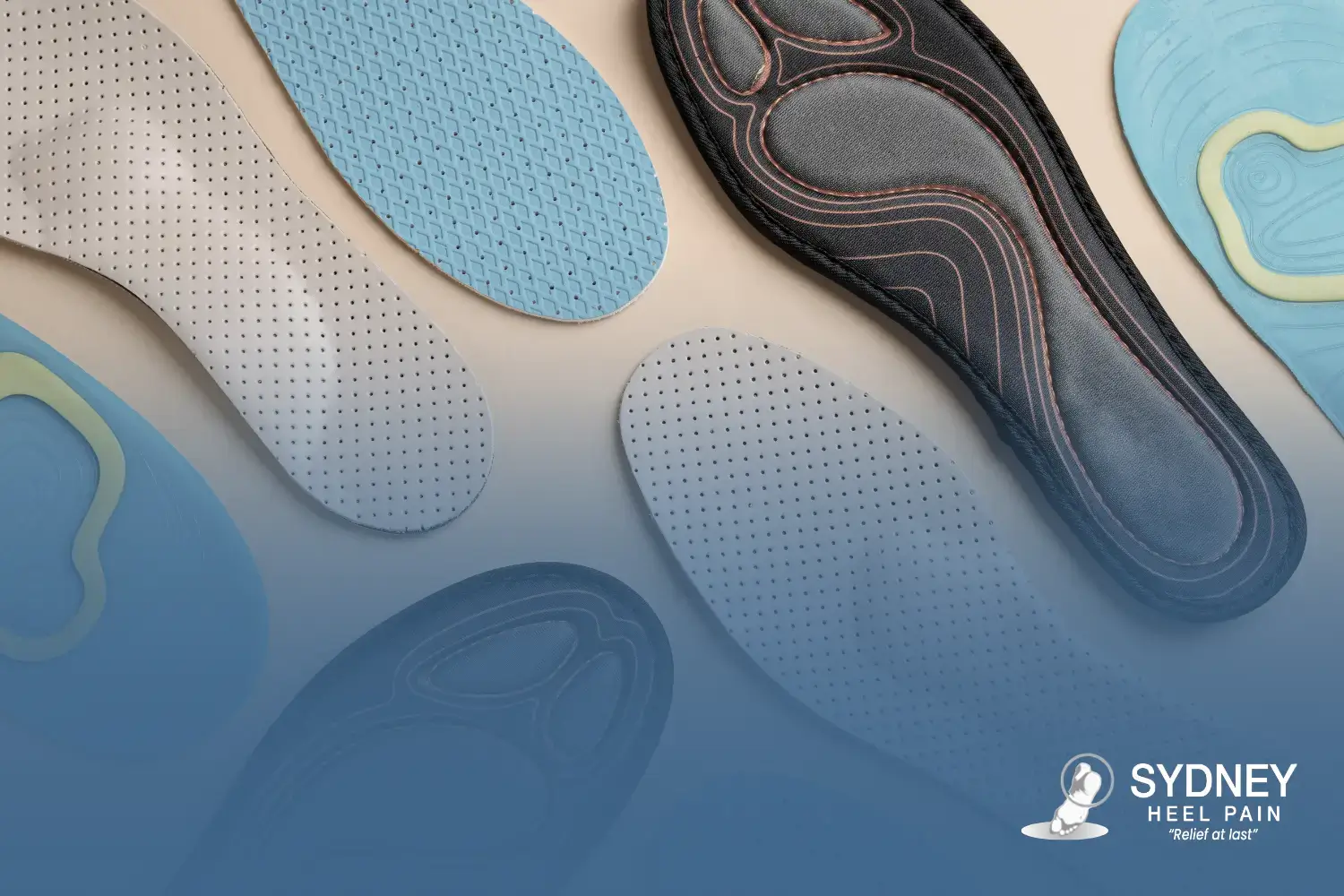
Orthotics broadly fall into two main groups. Custom orthotics and over-the-counter options both sit inside your shoes, but they serve very different roles in treatment.
Custom orthotics and over-the-counter inserts differ in how they’re made and who they suit best. Over-the-counter orthotics follow standard shapes and sizes, while custom devices are prescribed for an individual’s unique foot mechanics.
Differences Between Custom and Over-the-Counter Orthotics
Custom orthotics are used to manage conditions such as plantar fasciitis and Achilles pain. These orthotic devices can adjust load distribution more precisely.
Over-the-counter options provide general support but lack the precision and adjustability that custom devices offer. Custom orthotics are often recommended for more complex or persistent conditions, while over-the-counter devices may be suitable for mild discomfort or short-term use.
Custom Orthotics
Custom orthoses are designed to address specific foot conditions with precise, tailored support. These custom-made orthotics are crafted to match an individual’s foot shape and movement pattern, providing a level of precision that OTC insoles aren’t designed to match.
Unlike generic options, custom-made devices offer targeted relief to areas under strain, such as the plantar fascia or Achilles.
- Fit: Designed to match your specific foot shape and heel position for a precise fit.
- Targeting: Provides support for specific problem areas, such as the plantar fascia or Achilles.
- Function: Changes how the foot handles load and motion to reduce strain.
- Materials: Uses firmer, more durable materials that hold their shape under load.
- Lifespan: Typically lasts longer due to the use of high-quality, durable materials.
- Clinical oversight: Prescribed and reviewed by a professional to ensure proper fit and ongoing relief.
Over-the-Counter Orthotics
OTC orthotics are often marketed as an easy solution for foot problems. However, these store-bought insoles are typically prefabricated inserts designed to fit a broad range of feet, rather than being tailored to an individual’s specific shape.
They’re built around general support rather than targeted mechanical unloading — the approach needed to address specific tissue st
- Fit: OTC orthotics are trimmed to fit general foot shapes, not personalised for your unique foot structure.
- Targeting: They offer broad support but don’t address specific areas, such as the plantar fascia or Achilles.
- Function: Rather than reducing mechanical stress on specific structures, OTC devices offer generalised support that doesn't address the root cause of loading.
- Materials: Typically made from softer foams or gels that compress under load.
- Effectiveness: OTC orthotics may offer temporary relief but are less effective for long-term support or more severe foot conditions.
How Sydney Heel Pain Clinic Makes Custom Orthotics
At Sydney Heel Pain Clinic, we begin with a detailed biomechanical assessment to understand your gait and identify areas where excess load affects your foot and ankle. A 3D foot scan captures your unique foot structure, measuring foot shape and heel angle with an accuracy of around 0.1 mm.
Using this data, we provide custom-made orthotics specifically for your feet, ensuring they fit and provide precise orthotic support. These orthotics are designed to unload the plantar fascia and reduce mechanical strain on the Achilles, so the affected tissues can begin to settle.
- The 3D scan process refines shape and heel angle before any orthotic is made.
- The final custom foot device is 3D-printed in-house, with most custom-made orthotics ready in about 48 hours once approved.
- After printing, the orthotics are checked and adjusted to ensure a precise fit that delivers accurate, targeted unloading.
How Do You Get Fitted for Custom Orthotics?
Getting fitted for custom orthotics starts with a detailed consultation. A podiatrist will review your medical history, activity levels, and any foot pain you may be experiencing.
The next step involves examining your feet and legs for tenderness, alignment, and range of motion. This helps identify how your foot handles load and where stress may be causing problems.
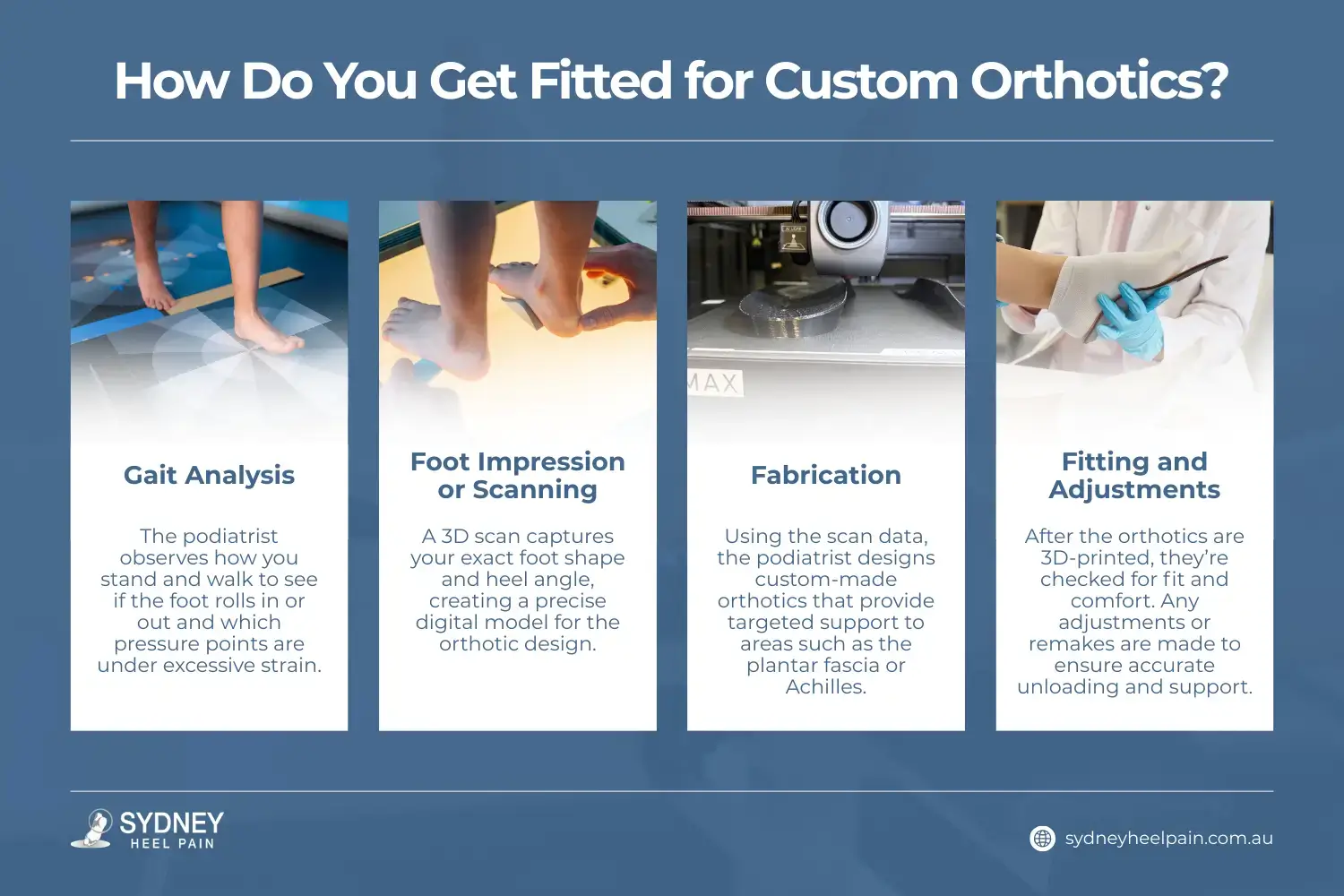
- Gait analysis: The podiatrist observes how you stand and walk to see if the foot rolls in or out and which pressure points are under excessive strain.
- Foot impression/scanning: A 3D scan captures your exact foot shape and heel angle, creating a precise digital model that forms the foundation of your orthotic design.
- Fabrication: Using the scan data, the podiatrist designs custom orthotics that provide targeted support to areas such as the plantar fascia or the Achilles tendon. At Sydney Heel Pain Clinic, this design is then 3D-printed entirely in-house – meaning every stage, from scan to final device, is controlled and refined under one roof.
- Fitting and adjustments: After the orthotics are 3D-printed, they’re checked for fit and comfort. Any adjustments or remakes are made to ensure accurate unloading and support.
This process ensures that your custom-made orthotics fit your specific foot structure to support symptom management and aim to reduce mechanical strain caused by conditions like flat feet or high arches.
When to See a Podiatrist
If you experience persistent foot pain, especially in the heels, arches, or ankles, it may be time to see a podiatrist.
Chronic discomfort, especially during walking or running, should be addressed sooner rather than later. Other signs include referred pain in the knees, hips, or lower back, which could result from poor foot alignment.
Consider podiatry if you have:
- Persistent pain: Chronic discomfort in the feet, heels, arches, or ankles, especially during walking or running.
- Referred pain: Knee, hip, or lower back pain that may stem from poor foot alignment.
- Failed self-treatment: Store-bought orthotics or custom prescription orthotics have not helped reduce foot pain, or you are replacing them frequently.
- Visible abnormalities: Noticeable flat feet, high arches, or bunions.
- Lifestyle or activity change: You are spending more time on your feet, starting a new sport, or need better support for your feet.
- Existing conditions: Diabetic foot, conditions like arthritis, or recurring injuries such as ankle sprains.
- Signs of wear: Your current custom-made orthotics are cracked, have lost their shape, or no longer provide pain relief.
If you're dealing with chronic foot pain, it's time to take control. At Sydney Heel Pain Clinic, our podiatry team is committed to helping you find the right orthotic solution for your foot condition.
Whether you need custom-made orthotics or expert guidance on managing discomfort, we’re here to support your path to relief. Investing in a custom orthotic may play an important role in managing your symptoms.
Book an assessment at Sydney Heel Pain Clinic to discuss your foot condition and explore whether custom orthotics are the right option for you.
Custom Orthotics vs Over the Counter FAQs
Can you claim custom orthotics through Medicare?
Standard Australian Medicare doesn’t cover custom-made orthotics. Under a Chronic Disease Management (CDM) plan, eligible patients may receive Medicare rebates for podiatry consultations. Still, orthotic devices are usually an out-of-pocket expense or covered by private health insurance.
How long does it usually take to get custom orthotics in Sydney?
Timeframes vary between clinics. Some podiatry practices send foot scans to external labs, which can take a few weeks before the orthotics are ready. At Sydney Heel Pain Clinic, custom orthotics are 3D‑printed in‑house, and most pairs are ready in about 48 hours.
Can you wear custom orthotics in more than one pair of shoes?
Yes, custom-made orthotics can be worn in multiple pairs of shoes, as long as the shoes have enough depth and width. A shoe with adequate depth prevents pressure points by avoiding discomfort on the top of your foot or toes. It also helps prevent heel slippage by ensuring your heel sits securely in the heel cup.
Back to Top: Custom Orthotics vs Over-the-Counter Orthotics: Understanding the Difference